Services · Product discovery
Software discovery phase: a scope, a prototype and a fixed estimate before you build
A short, paid phase before development where we work out what the first release must do, how it will be built and what it will cost. You leave with documents you own, whether or not you build with us.

Short answer
A software discovery phase is a fixed, paid piece of work before development that turns an idea or a brief into a buildable plan: user stories with acceptance criteria, a clickable prototype of the main flows, an architecture note covering stack, integrations and risks, and an estimate per milestone. At Innovation Insight discovery takes one to three weeks and costs $3k to $8k. You own everything it produces and can take it to another vendor.
Reviewed by Zain Khalid Malik, CTO & Co-founder · Updated
What a discovery phase is for
Most software projects that run over budget do so because of decisions nobody made before the build: which users come first, what the first release leaves out, which systems it has to talk to, and what happens when those systems misbehave. Discovery makes those decisions early, on paper and in a prototype, where changing your mind costs hours instead of sprints.
It is not a sales exercise. Discovery is paid, it has a fixed price and a fixed length, and its output is written so that any competent team could build from it. That is why we are comfortable saying you can take it elsewhere.
What you receive
| Deliverable | What it contains | Why it matters |
|---|---|---|
| Scope | User stories with Given/When/Then acceptance criteria, grouped into milestones of two to six weeks, and an explicit list of what is out of the first release | Turns "build the app" into something that can be signed off line by line |
| Clickable prototype | The main flows in Figma, clickable end to end | You can put it in front of users or investors before paying for the build |
| Architecture note | Stack, hosting, data model, integrations, security and compliance needs, and the risks we see, with the reason for each choice | The expensive technical decisions are made once, in writing |
| Estimate | A fixed price per milestone, or a monthly team plan if the roadmap is still moving | A number specific enough to budget and sign against |
| Release plan | Milestone order, dependencies, what you need to provide and when | Partner approvals, data access and content stop being surprises |
The scope uses the same structure as our free PRD template, so you can see the format before you start, and the estimate maps straight into a statement of work.
How the one to three weeks run
- Kick-off: we read everything you already have (briefs, spreadsheets, an existing product or codebase) and agree who we need to talk to.
- Interviews: short sessions with the people who will use, sell and support the product, and with whoever owns the systems it connects to.
- Flows and prototype: the main journeys sketched, then clicked through with you, and with a few real users where we can reach them.
- Technical spike: where a risk is uncertain, such as an unfamiliar API, an AI feature or a data migration, we test it with real code before we estimate it.
- Scope and estimate review: we walk you through the scope, what was cut and why, and the estimate per milestone, and revise once.
When to run a discovery phase, and when not to
| Situation | Our advice |
|---|---|
| A new product from an idea or a short brief | Run discovery. It is where most of the value is |
| A detailed specification already exists | A shorter review of the spec and the risky parts may be enough |
| An existing codebase you want us to take over | Start with a code and infrastructure audit inside discovery |
| You need several engineers on an existing roadmap now | Skip discovery and hire a dedicated team instead |
| You are comparing agencies | Ask each for a paid discovery and compare what you get, not the hourly rate |
Discovery on real projects
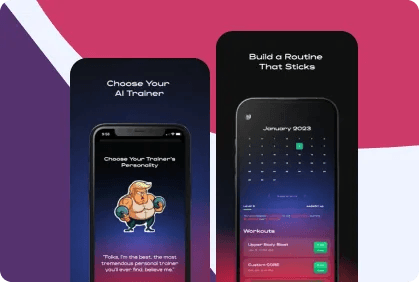
- Toned.ai: a discovery phase defined the first release and the AI features it depended on; the app launched five months after discovery started.
- Chat Your History: an AI memoir product with web chat, SMS and phone interviews, live five months after discovery started.
- CareFlair: user research with participants and support workers, then wireframes and interactive prototypes for every major flow, before any code was written.
After discovery most clients continue into the build with the same lead, in two-week sprints with a demo at the end of each. For first releases, see MVP development; for larger systems, custom software development.
Sources and further reading
Next step
Tell us what you're building and get a written estimate.
A senior engineer replies within one business day. NDA on request.
Products we've shipped, and what happened next.
Case studies written from the technical documentation of each project: the stack, the scale and the outcome.



Questions we get asked a lot.
What is a discovery phase in software development?
A short, paid phase before development that produces a written scope, a clickable prototype, an architecture note and an estimate. It exists to make the expensive decisions before the build, when changing them is cheap.
How long does a software discovery phase take?
One to three weeks with us. A single-platform MVP is usually one to two weeks; a product with several user roles, integrations or an existing codebase takes up to three.
How much does a discovery phase cost?
$3k to $8k, fixed before we start. The price depends on the size of the product and how much already exists, and it is credited against the build if you continue with us.
Do we own the discovery documents?
Yes. The scope, prototype, architecture note and estimate are yours, and you can take them to another vendor if you choose.
Can we skip discovery and go straight to development?
Yes, if you already have a detailed specification, or if you want engineers on a roadmap that already exists. For a new product from a brief, skipping discovery usually moves the same decisions into the build, where they cost more.
Who takes part from our side?
One decision maker who can say yes or no to scope, plus an hour or two each from the people who will use the product and whoever owns the systems it must connect to.